The short answer
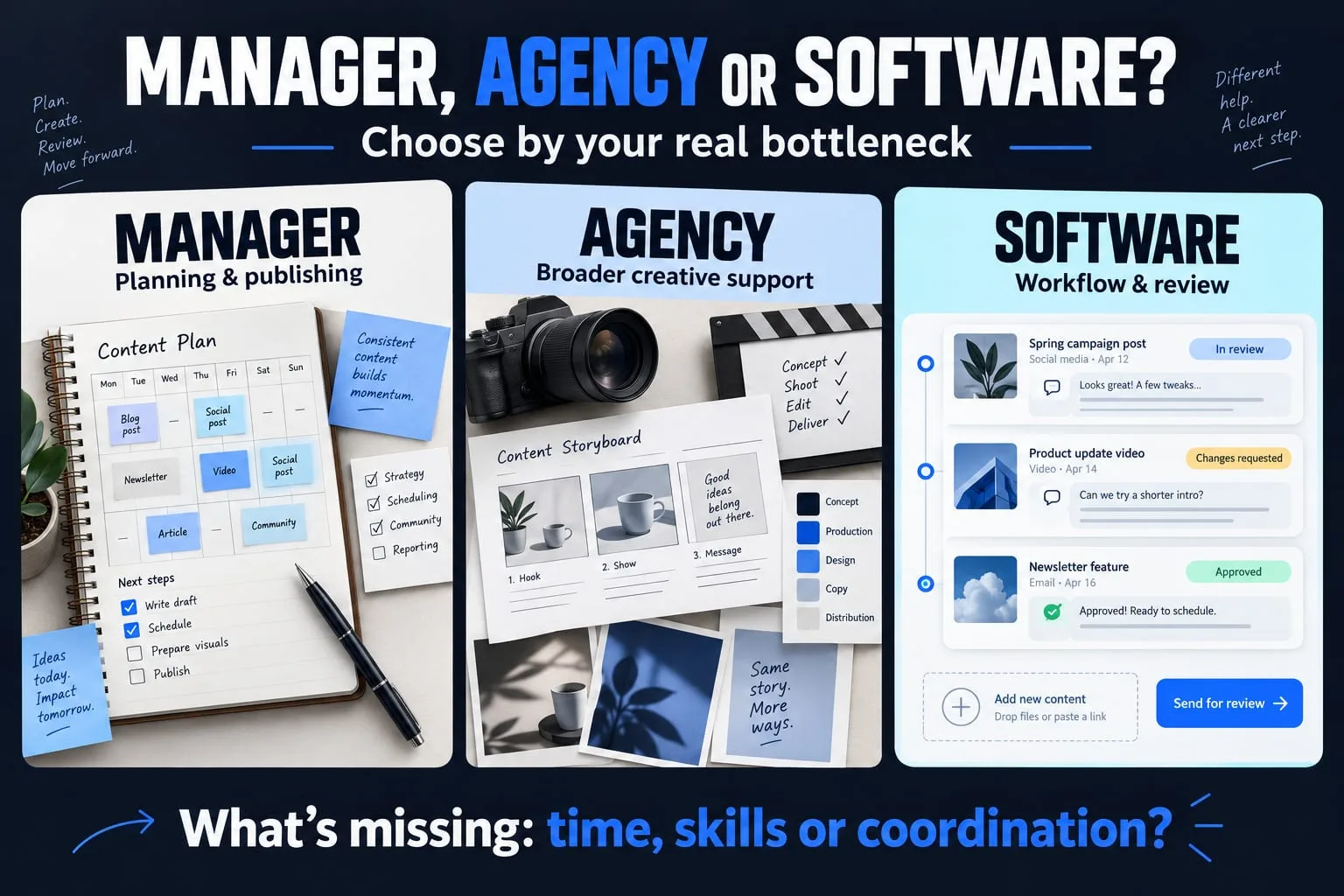
Choose a social media manager when you need someone to own the work, an agency when you need a coordinated range of skills, and software when your people need a clearer process. A tool can organise tasks; it still needs someone to decide what to say, approve it and respond to customers.
Searching for the best social media manager can mean three different things: hiring a person, working with an agency or buying a management tool. These options solve different problems. Start by naming the work that is getting stuck, rather than comparing feature lists or promises of reach.
This guide offers a practical way to choose. The examples are illustrative, not NEXVORA client results. There is no universal best option: the right combination depends on your team's time, skills, channels and ability to review the work.
1. Find the job that needs an owner
Trace a recent post from the initial idea to the published result. Who chose the audience and offer? Who made the material? Who checked its accuracy? Who posted it and answered the replies? A missing person and a missing process call for different fixes.
If nobody has time to plan or create content, a new calendar will not supply that time. If the team already produces useful material but loses approvals in messages, clearer workflow software may help. If several specialist tasks regularly exceed the team's skills, discuss a broader agency scope.
- No clear message: decide the audience, offer and purpose first.
- No time or accountable owner: consider a manager with a defined scope.
- Several skills missing: compare an agency's actual team and deliverables.
- Versions, approvals or handovers getting lost: improve the process before choosing a tool.
2. Compare people, agencies and software
The following is a starting point for a conversation, not a fixed description of every provider. Ask who will perform each task and what is excluded from the proposed service.
| Option | Useful when | Clarify before choosing |
|---|---|---|
| Social media manager | You need a named person to plan and coordinate day-to-day content work. | Do they also create visuals, edit video, publish and handle replies? Who covers absence? |
| Social media agency | You need a coordinated mix of strategy, writing, design, video or campaign support. | Who actually works on your account? What is included, what needs approval and what costs extra? |
| Management software | Your people can do the work but need shared planning, assets, approvals or reporting. | Does it support your specific accounts and formats? Who maintains connections and checks publication? |
| A combination | You need an accountable operator and a shared process that survives handovers. | Keep ownership, responsibilities and access clear across every person and tool. |
3. A small-business example: fix the handover first
Imagine a local fitness studio. The owner knows the class schedule, a coach records short clips and a freelance designer prepares the posts. Captions and approvals move through several chats. A changed class time reaches the coach but not the person publishing, so an old offer goes out.
The first improvement is one brief containing the current schedule, permitted footage, draft caption, destination link and named approver. The owner reviews the exact version before the publisher posts it. The publisher then adds the public post link. A shared document may be enough to start.
If the studio has nobody to turn that material into a weekly plan, it may need a manager. If it needs filming, design and a broader campaign, it can compare agency proposals. If those people already exist and the handovers remain difficult, software can keep their work connected. Review whether fewer corrections and clearer ownership result before expanding the system.
4. Ask for evidence you can assess
Bring the same brief to each candidate so that proposals are comparable. Explain your audience, offer, existing accounts, available assets and the work your team can do. Ask for a proposed first cycle, the review process and a sample deliverable that the provider is allowed to share.
Agree on the cost of people, software and any advertising separately. Ask about revisions, access, support, cancellation and handover before committing. A promise of followers or reach does not explain how the work will be done or whether the right people will enquire.
5. Keep your accounts and decisions under your control
Agree who owns the accounts, brand assets and final content, who can approve drafts and who can publish. Use the platform's supported access arrangements and give each person only the access required for their role. Content approval and permission to change an account connection are separate decisions.
Ask what happens if a connection fails, a team member leaves or a publishing request has an uncertain outcome. Someone should be responsible for checking the platform and continuing manually when needed. Adding AI does not remove the need to check claims, media permissions, dates and customer-facing commitments.
Where NEXVORA can help
NEXVORA builds custom social media systems around planning, approved brand assets, review, handovers and available reporting. We start with the team's current process and agree on a useful scope. This is a systems service; it does not mean that a full managed campaign or advertising service is automatically included.
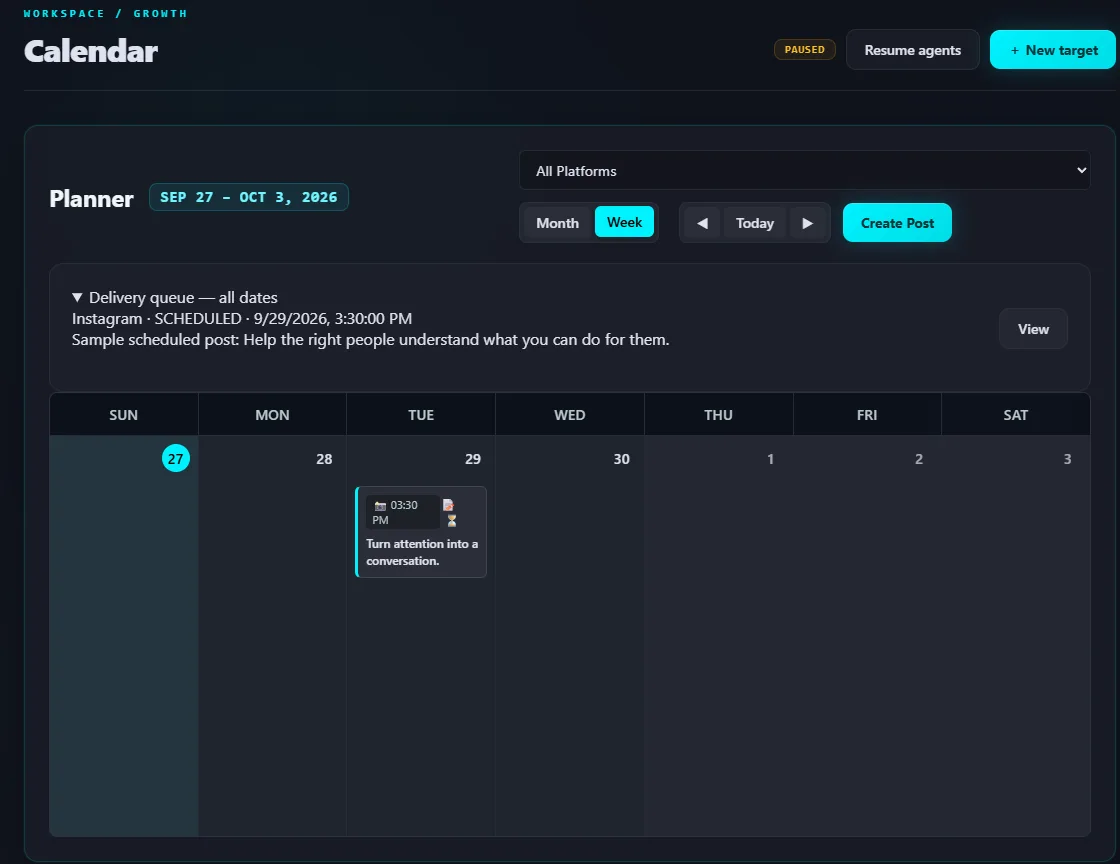
NEXVORA Growth is our developing product direction for research, content, publishing and learning from results. Its public interface is a preview, and the calendar image in this guide uses sample data. It is not a promise that every platform integration is available. Explore the preview to understand the direction, or discuss a custom workflow for your actual team.
Write your selection brief in ten minutes
Choose one audience and one real offer. List the channels you use, who currently owns each step and one handover that fails. Decide whether the missing piece is time, skills or coordination. Use that brief to compare a manager, an agency or a tool before committing to a larger setup.